An Ashfall. The kind that spews out of a volcano. And it happened around twelve million years ago. Give or take. It also happened in my old stomping grounds. Idaho. Southwestern Idaho. The cool thing is that it’s not exactly where it used to be. Twelve million years ago that is.
I’m not the oldest man on the planet. Far from it. But still the concept of plate tectonics was floated and accepted within my lifetime. I find that amazing. The particular crustal plate I’m currently sitting on is moving. A whopping two centimeters, or thereabouts, a year. Seafloor spreading. You can go to Iceland and either swim in water that fills the rift between the North American plate and the Eurasian plate. Or, there is at least one place you can straddle it! To quote Liz Lemon, “I want to go to there.”
There’s another cool fact about this subject, and that’s the Yellowstone Hotspot. A magma plume of sorts rising up from the earth’s mantle. Just like the one that continues to create the Hawaiian islands, this one is basically stationary. Relative to the mantle that is. You see the plates move over the mantle. In particular the North American plate moves over the location of this hotspot. Twelve million years ago the location in southwest Idaho was over the Yellowstone Hotspot and like a piece of lint tickling our nose it tickled the crust until it sneezed. Hmmm. That analogy seems a little silly, but I’m gonna own it. That hotspot caused a huge volcanic eruption. A giant cloud of ash spewed out and the easterly winds carried this ash cloud (ashfall if you will) eastward, some reaching the Atlantic.

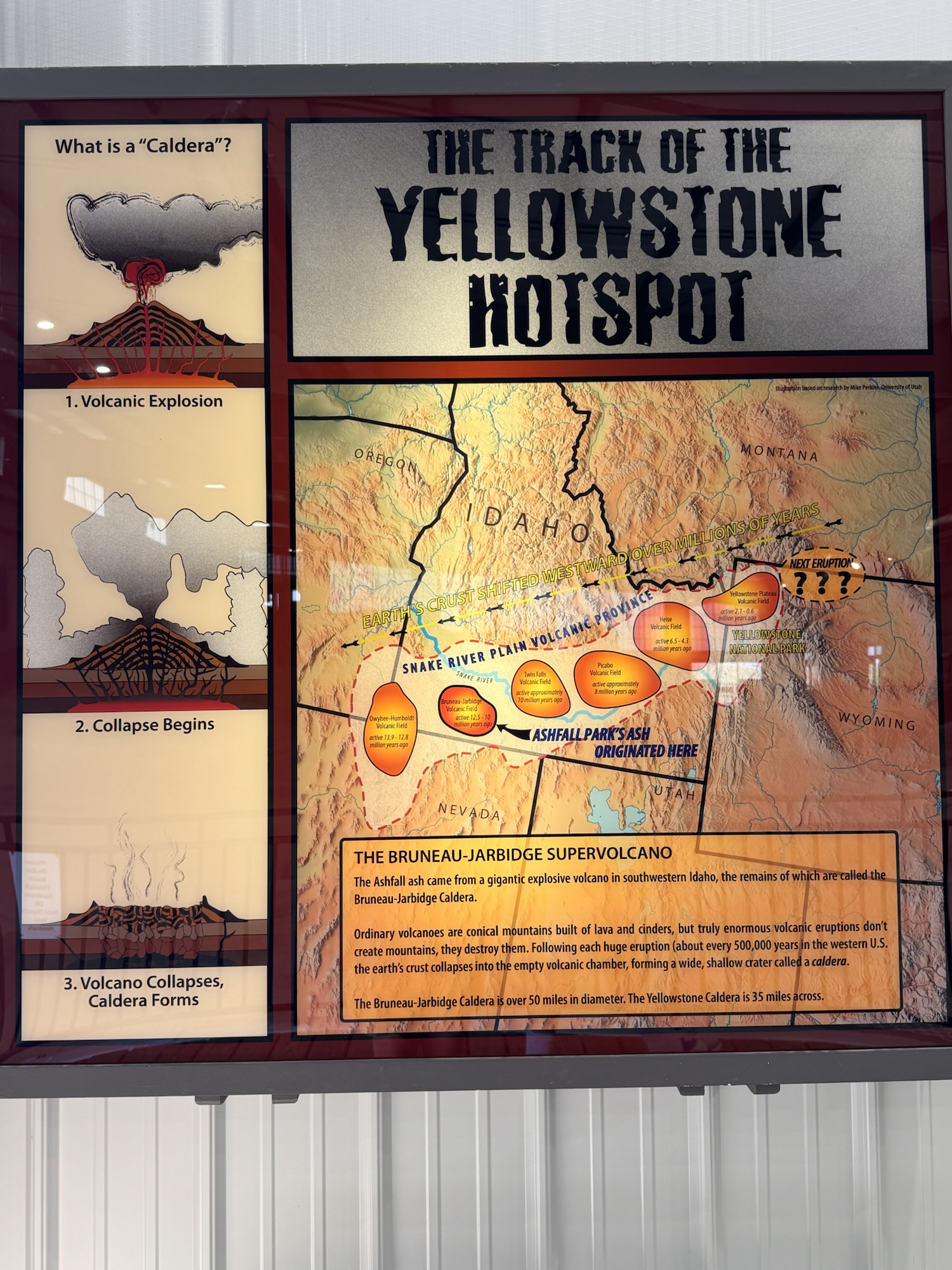


But let’s cut to the chase here. We’re talking about one particular spot. Royal Nebraska. Or close to it. Twelve million years ago this was a location only a few million years removed from having been underwater. The Western Interior Sea had dried up, and the land had been lifted up a bit from the Laramide Orogeny (I think, geologists chime in). This one particular location was a large watering hole. And there were tons of animals enjoying the refreshing agua available. I’m no meteorologist, so I can’t accurately describe what this looked like, but I’m an insipid purple-prose writer.
The sky darkened. An ominous cloud drifting in from the west. A three-toed horse tried to squeeze between two barrel-bodied rhinoceroses to get a drink of water. It didn’t notice the foreboding situation overhead. The rhinos, thinking it was each other pushing, turned their heads and jousted with their horns for a moment. Not a mating ritual, more of a watch it buddy move. The horse had ducked his head and snuck in to the cool water. As the sky continued to darken, the air thickened. The smaller animals felt it first, but soon even the larger animals began to wheeze. Eyes wild the smaller animals sprinted around the water hole trying to escape an invisible thing clutching at their lungs.
And so it went. About a foot or so of ash fell over the area, but due to the depression the watering hole was in, and with the help of the wind, several feet of ash collected in this area. Soon the animals’ carcasses were covered with a flour-fine ash; their bodies, and their story, delivered to posterity. A story uncovered beginning in the 1970s, and continuing to be uncovered to this day.
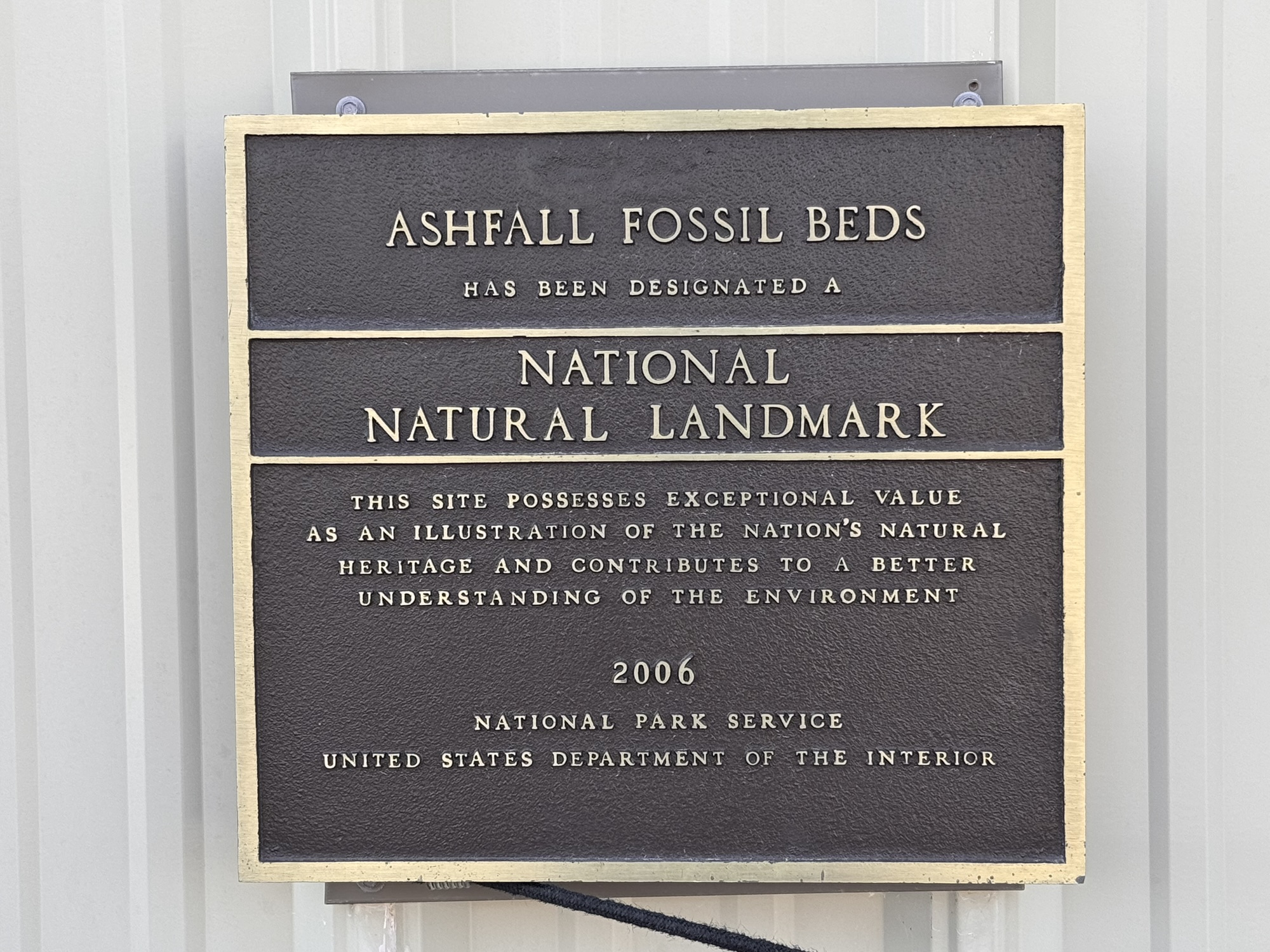
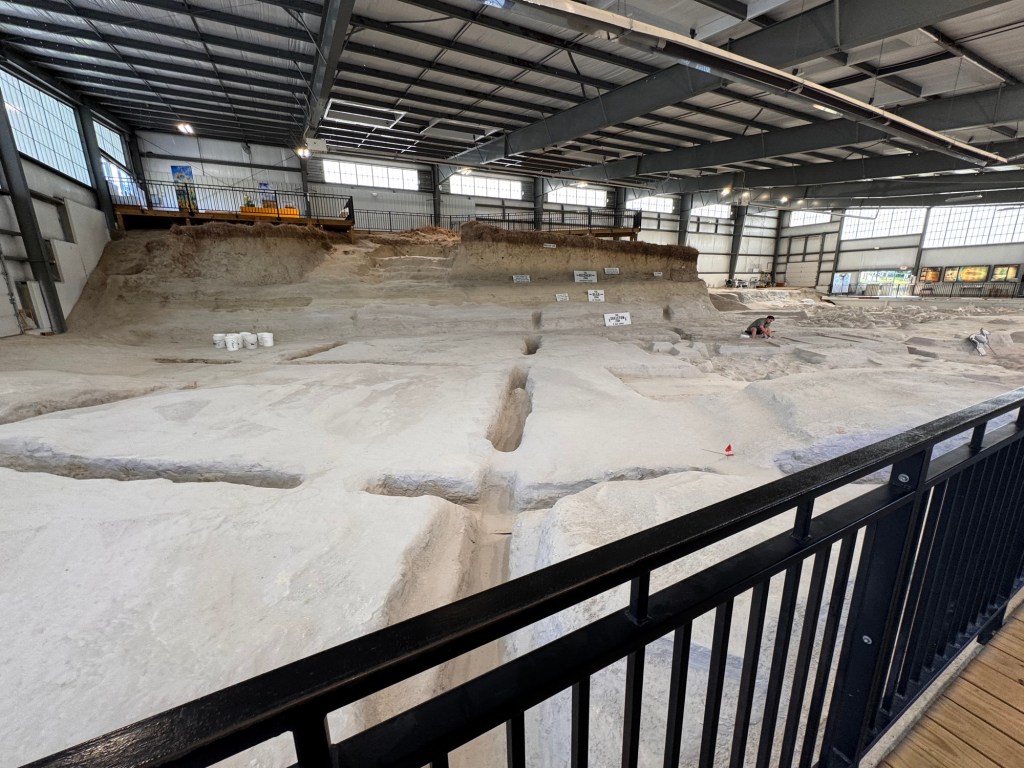
The state of Nebraska bought the land and have built the Hubbard Rhino Barn over the main dig site. Paleontologists continue to work the dig, yielding more and more information of this slice in time find.
And just a few enticing photos. Or, well, photos. It’s up to you if they are enticing or not.





And this epic visit wraps up my trip out west in 2025. All that’s left is a mad dash home now. I hope everyone has found some enjoyment in the articles I’ve written, and the pictures I’ve posted.
Peace and love. Marv
P. S. Just wait until next year!

 Divermarv
Leave a comment